To handle a customer complaint, listen to the whole story without interrupting, thank the customer for telling you, and apologize for how it felt. Then ask what would make it right. Fix it quickly, or explain exactly what happens next and when. Follow up once it's sorted, and log it so the same problem doesn't come back.
ReviewUsToday emails every customer a one-tap rating request, and a 1 to 3 star rating opens a private form that alerts the owner instantly. Complaints can reach you before they reach Google, and the customer can still post publicly whenever they like.
What are the steps to handle a customer complaint?
There are six steps: listen, thank, apologize, ask, fix and follow up. The order matters more than the wording, and most complaints go wrong at step one, when the owner starts explaining before the customer has finished. Here's each step, with something you can actually say.
| Step | What to do | What you can say |
|---|---|---|
| 1. Listen | Let them finish. Don't defend yet. | "Tell me what happened." |
| 2. Thank | Thank them for telling you, not someone else. | "Thanks for telling me directly." |
| 3. Apologize | Apologize for the experience, without blaming staff. | "I'm sorry. That's not how it should have gone." |
| 4. Ask | Ask what a fair fix looks like to them. | "What would make this right for you?" |
| 5. Fix | Fix it now, or give a clear next step and a time. | "I'll redo it today and call you by 4." |
| 6. Follow up | Check back, then log what caused it. | "Just checking the fix held up." |
Step 4 is the one owners skip, and it's the cheapest, because customers often ask for less than you'd have offered. Step 6 is the one that stops the same complaint from turning up next Tuesday, wearing a different coat.
How do you deal with customer complaints without getting defensive?
Separate the complaint from your pride. The customer is describing their experience, and their experience is a fact even when their version of events isn't. Keep your voice low, use their name, and repeat the problem back in your own words. Once they feel heard, the temperature usually drops on its own.
The hard part is the first ten seconds. Your brain is already drafting a closing argument, complete with exhibits. Let it draft, just don't read it out loud.
| Say this | Not this |
|---|---|
| "I'm sorry that happened." | "I'm sorry you feel that way." |
| "Let me find out what went wrong." | "That's never happened before." |
| "Here's what I can do today." | "That's our policy." |
| "I'll call you by Friday with an answer." | "We'll look into it." |
If someone gets abusive, you're allowed to end the conversation calmly, because handling a complaint well doesn't mean absorbing abuse. I'd also give every staff member permission to fix small problems on the spot, up to a set dollar amount. A $15 fix today beats a manager callback on Monday.
How do you respond to customer complaints in writing?
Reply within a day if you can, keep it short, and move the details offline. A written reply should thank the customer, apologize for the experience, say what you're doing about it, and give a direct way to reach you. Leave out blame, excuses and anything private about the customer.
Public replies matter because other customers read them. In BrightLocal's 2026 Local Consumer Review Survey, 89% of consumers expect owners to respond to reviews, and 81% expect a response within a week. A reply posted three months later reads like a ghost finally answering the door.
Here's how to reply to a Google review, following Google's own help page:
- Go to your Business Profile.
- Select Read reviews.
- Next to the review, select Reply.
- Type your reply in the box and select Reply.
Google says you must verify your business before you can reply. The reviewer gets a notification when you do and can still change their review afterward, which is one more reason to be kind.
| Where | A reply that works |
|---|---|
| "Thanks for letting us know about the late install, Sam. I'm sorry. We've booked the crew for Thursday at 9, at no charge. My direct number is below if anything else comes up." | |
| Google review | "Thank you for the feedback, and I'm sorry the visit fell short. That's not our standard. Please call me on the number in our profile so I can put it right." |
For harder cases, our guide on how to respond to negative reviews has more examples.
How do you handle customer complaints in a restaurant?
Handle it at the table, fast. Go over, listen, apologize, and offer a fix before the meal is over: a remade dish, a dessert, or a charge taken off the bill. Restaurant complaints are about the next five minutes, so a solution delivered tomorrow by email is already too late.
The server should fetch a manager for anything beyond a simple remake. Nobody wants to explain a cold steak twice, especially to someone holding a notepad and no authority.
| Complaint | A fair fix on the spot |
|---|---|
| Food is cold or wrong | Remake it right away, and take it off the bill if the wait is long |
| Long wait for a table or food | Tell them the real wait time, then offer a drink or starter |
| Rude or slow service | Manager apologizes in person and takes over the table |
| Wrong bill | Fix it at the table, without making them prove it |
If I ran a restaurant, I'd log every comp with the reason, and after a month the list would tell me which station needs fixing. For the online side, see our guide to restaurant review management.
How do you hear complaints before they become reviews?
Ask every customer how it went, soon after the visit, and give unhappy ones an easy private way to tell you. Plenty of unhappy customers never complain in person, so they just leave and sometimes write a review instead. A short rating request catches those quiet complaints while you can still fix them.
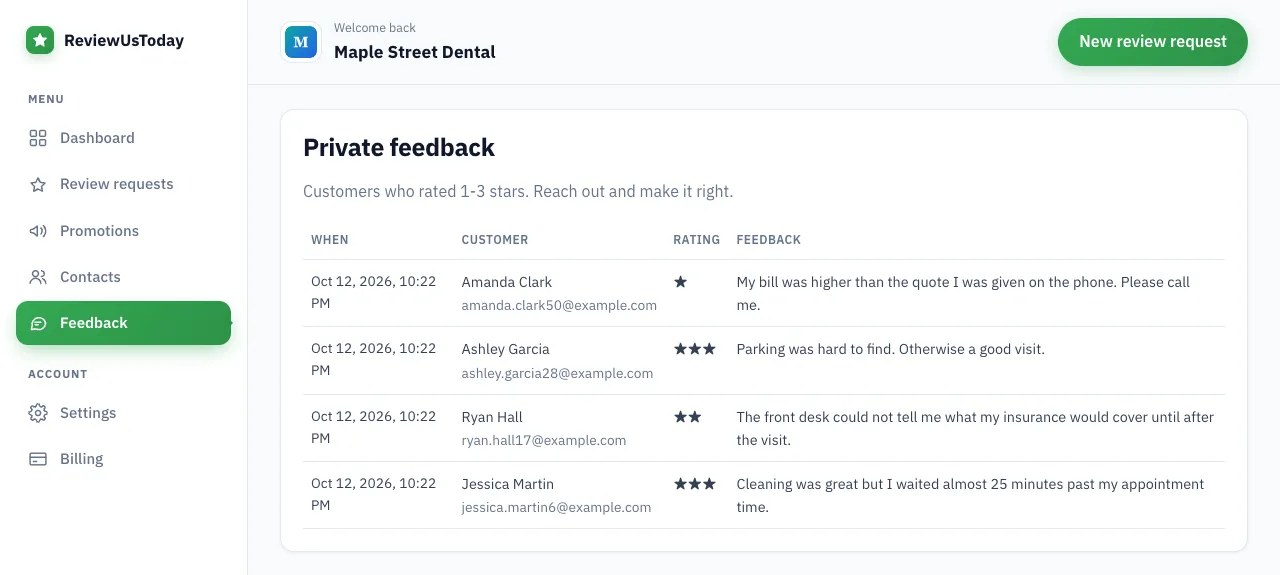
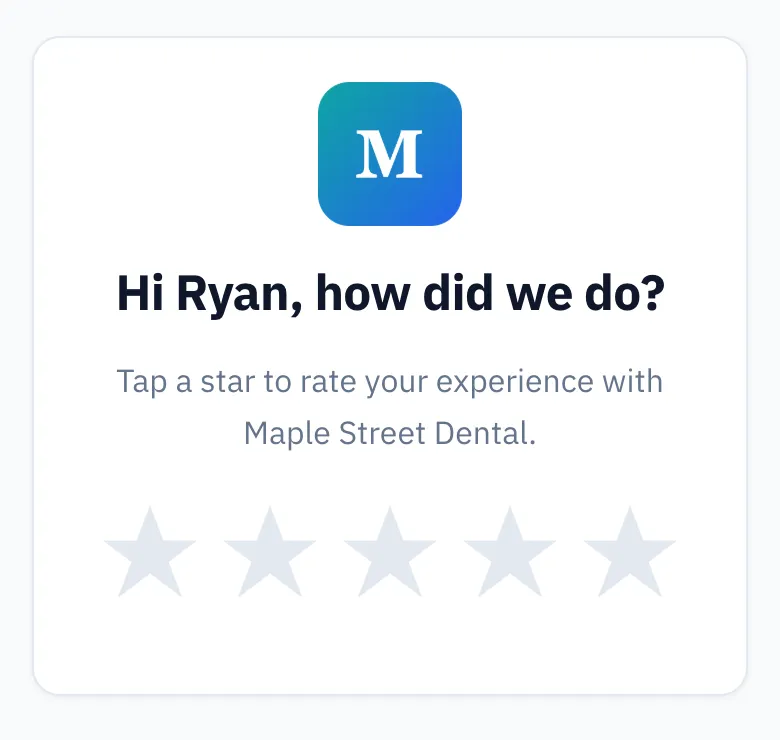
Here's what that looks like in ReviewUsToday. We ran a demo business, Maple Street Dental, through the app with 80 sample customers. This is sample data, not a real customer's results, but it shows the flow. Of the 51 people who rated, 4 left private feedback, and each one sent the owner an email alert.
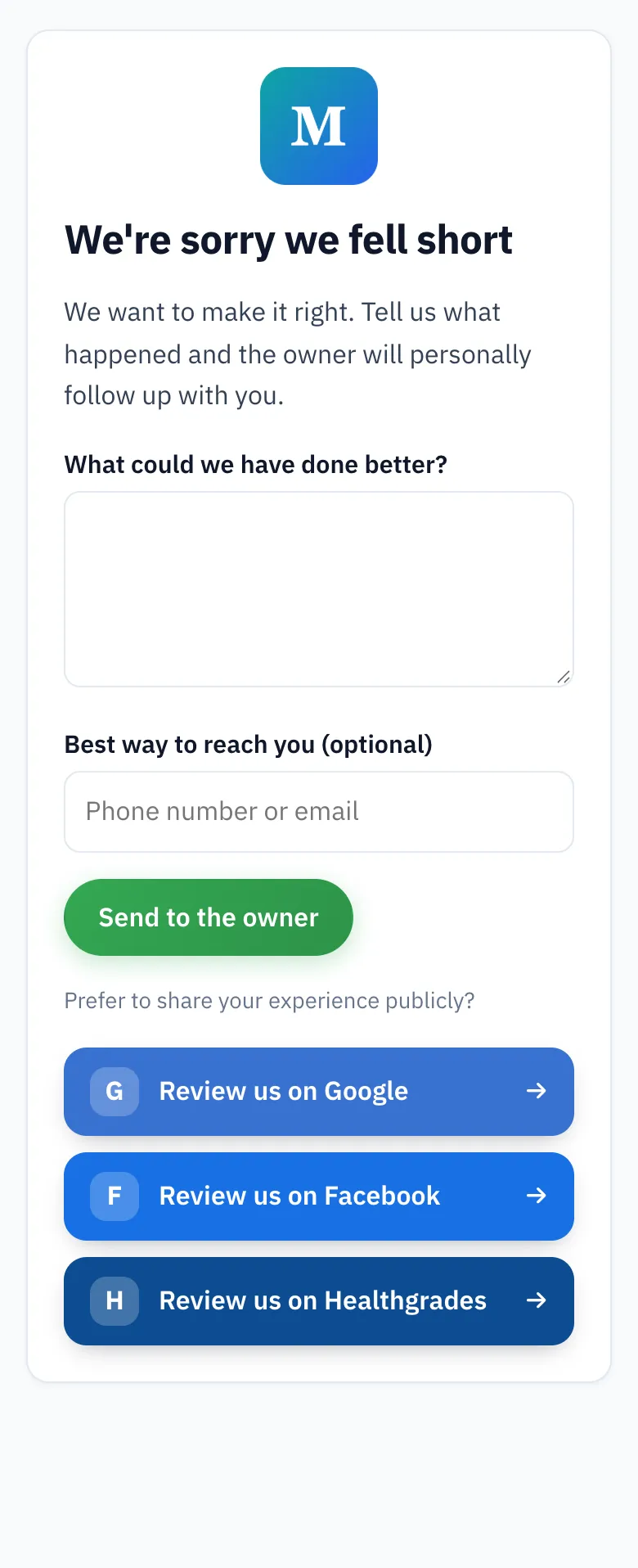
The important part is what stays on that page. A customer who taps 1 to 3 stars sees the private form, plus buttons for every public review site. Hiding those buttons from unhappy customers is called review gating, and Google's policy bars businesses from selectively asking for positive reviews.
A private note isn't a way to bury a complaint. It's a faster lane to the owner, which is where the complaint wanted to go anyway. Our customer feedback survey guide covers what to ask.
Where ReviewUsToday fits
ReviewUsToday emails every customer a one-tap rating request and sends 1-3 star ratings to a private form with an instant owner alert. Every public review button stays on that page. It doesn't reply to reviews, monitor Google or send texts. See how review management with private feedback alerts works.
Frequently asked questions
What is the best way to handle customer complaints?
Listen without interrupting, thank the customer, apologize for the experience, and ask what would make it right. Then fix it quickly and follow up once it's done.
How quickly should you respond to a customer complaint?
Respond the same day if you can, even if it's only to say you're looking into it. For online reviews, BrightLocal's 2026 survey found 81% of consumers expect a response within a week.
Should you apologize if the customer is wrong?
You can apologize for how the experience felt without admitting fault for every detail. "I'm sorry this was frustrating" is honest and calms most conversations down.
Should I respond to complaints on Google publicly?
Yes. Keep the public reply short and polite, then invite the customer to contact you directly so the details stay private.
How do you stop the same complaint from happening again?
Log every complaint with its cause and the fix. Review the log once a month, and change the process behind the most common one first.
Sources
Keep reading
How to respond to negative reviews
How to respond to negative reviews: a calm 5-step method, 8 templates for slow service, wrong orders, pricing, rude staff and fake reviews, and what to avoid.
Customer feedback survey: what to ask, when to send it, and how to keep it honest
Customer feedback survey guide for local businesses: questions by business type, how short to keep it, when to send it, and how to avoid review gating.
Review gating: what it is, what Google and the FTC say, and what to do instead
Review gating means only sending happy customers to review sites. Here's what Google's policy and the FTC say, what is allowed, and a compliant review flow.