The FTC fake reviews rule took effect on October 21, 2024. Its official name is the Rule on the Use of Consumer Reviews and Testimonials (16 CFR Part 465). It bans fake reviews, buying reviews that express a particular sentiment, undisclosed insider reviews, fake "independent" review sites, review suppression and fake social media followers.
ReviewUsToday sends review requests for local businesses, giving every customer the same request and the same option to post publicly. Below is the rule in plain English. It's a summary, not legal advice.
What does the FTC fake reviews rule prohibit?
The rule has six main bans. It prohibits fake reviews, paying for reviews with a set sentiment, undisclosed insider reviews, fake "independent" review sites, review suppression and fake social media influence. Each ban has its own section in 16 CFR Part 465.
| Section | What it bans, in plain English |
|---|---|
| 465.2 | Fake reviews: from people who don't exist, never used the business, or misstate their experience |
| 465.4 | Incentives for reviews "expressing a particular sentiment" |
| 465.5 | Reviews by managers, staff or relatives without disclosing the relationship |
| 465.6 | Passing off a review site you control as independent |
| 465.7 | Groundless legal threats, intimidation or knowingly false accusations to block or remove a review |
| 465.8 | Buying or selling fake followers, views and similar |
Source: eCFR, 16 CFR Part 465.
Nothing here should surprise an honest owner. The rule mostly writes down what everyone suspected was off-limits, then adds a price tag.
When did the FTC fake reviews rule take effect?
The FTC announced the final rule on August 14, 2024, and it took effect on October 21, 2024. It sits at 16 CFR Part 465 and covers every business, right down to a one-person shop working out of a van.
| Date or detail | What happened |
|---|---|
| August 14, 2024 | FTC announces the final rule (press release) |
| August 22, 2024 | Published in the Federal Register (89 FR 68077) |
| October 21, 2024 | Rule takes effect |
| Who it covers | Any business, including "an individual who sells products or services" |
No business is too small to count, in other words.
What does the rule mean for a local business asking for reviews?
Asking real customers for reviews is fine. The rule exempts reviews that come from "generalized solicitations to purchasers" to post about their experience. Trouble starts when you fake reviews, pay for a particular rating, or let staff post without disclosure.
- Ask every customer the same way, after the job is done.
- Never write, buy or sell a review.
- If staff or relatives review you, they must disclose the relationship.
- Never threaten a reviewer. Respond to negative reviews calmly instead.
The FTC's questions and answers say "The rule does not prohibit giving incentives for reviews" unless the reward depends on what the review says. Google is stricter: its content policy bans incentives "in exchange for posting any review." So I'd skip incentives entirely. Our guide on how to ask for reviews shows a compliant process, and our review request software sends it for you.
Is review gating illegal under the FTC rule?
Not under the rule itself, but it's still risky. Asked about requesting reviews only from happy customers, the FTC answers: "The rule does not contain a specific prohibition against such conduct." It then adds: "But this practice could violate the FTC Act."
Google's policy is plainer: businesses may not "selectively solicit positive reviews from customers." Filtering out unhappy customers saves ten minutes and can cost far more. Our guide to review gating covers what counts.
What are the penalties under the FTC fake reviews rule?
The rule lets courts impose civil penalties for knowing violations. In December 2025, after warning 10 companies, the FTC said violations could bring civil penalties of "up to $53,088 per violation." It also said those letters "are not formal determinations" that anyone broke the rule.
"Per violation" is the phrase that matters. A pile of fake reviews isn't one fine; it's a job for a calculator. Source: FTC, December 2025.
What we see in ReviewUsToday
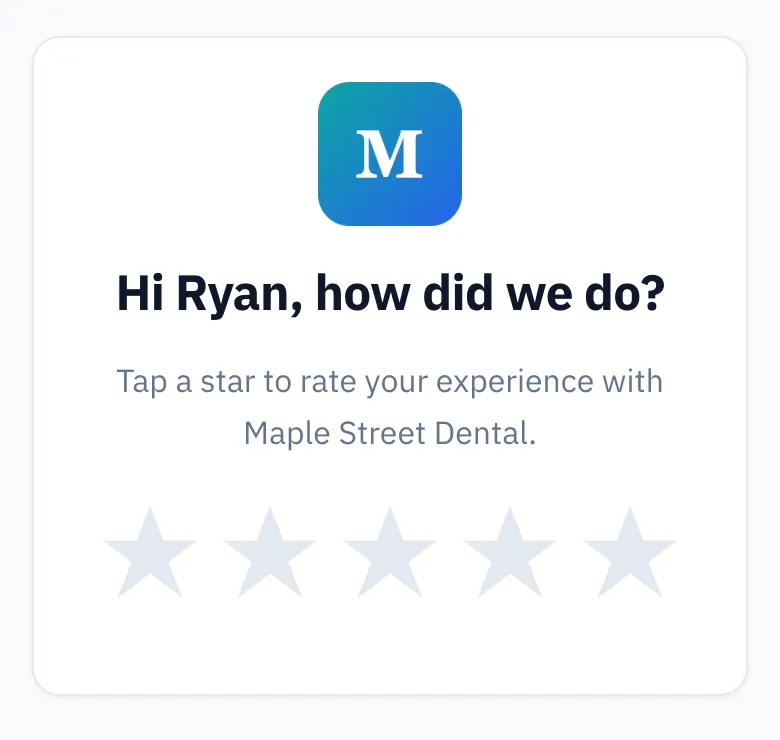
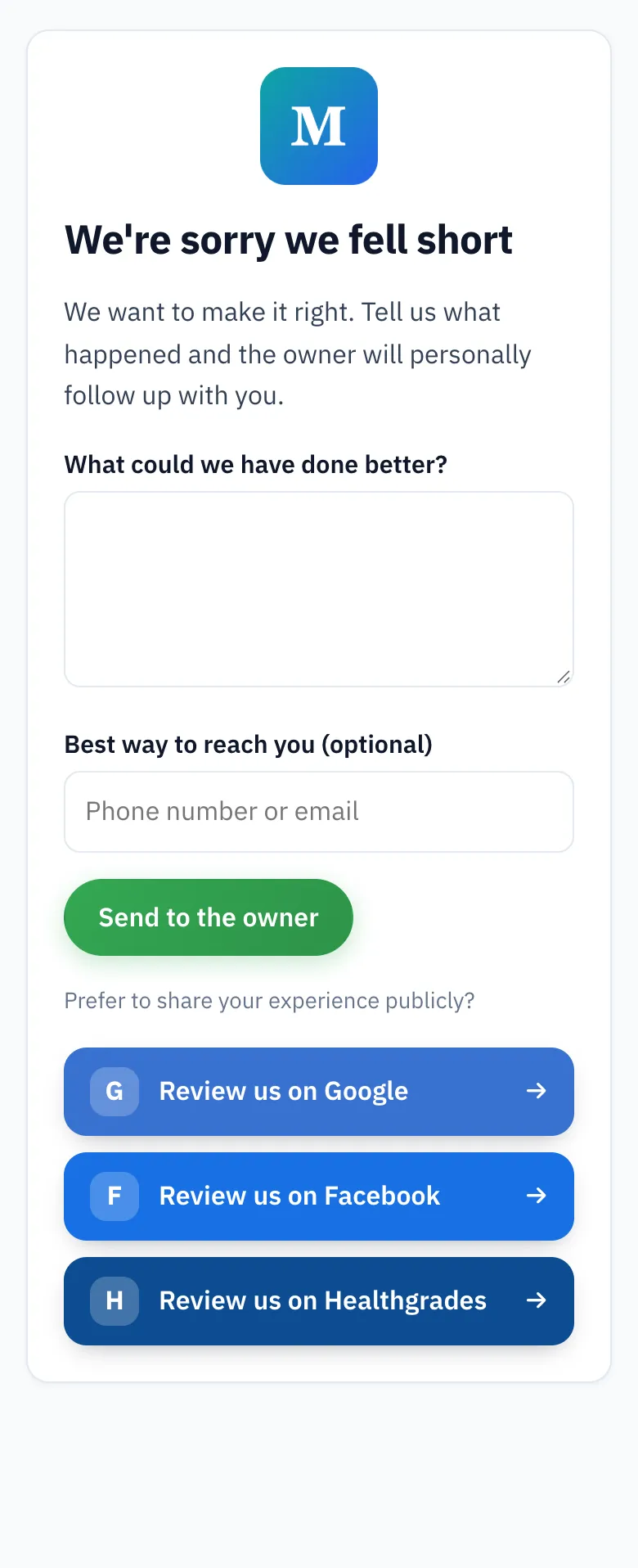
ReviewUsToday sends every customer the same one-tap rating request. Customers who rate 4 or 5 stars go to the review site. Those who rate 1 to 3 stars get a private feedback form, on a page that still shows every public review site.
Nobody gets filtered out of posting publicly. That's how the flow follows Google's policy against review gating.
Where ReviewUsToday fits
ReviewUsToday asks real customers for honest reviews by email and never writes, buys or filters reviews. It doesn't monitor or reply to reviews on Google or other sites. See how review management works, from $50 a month.
Frequently asked questions
When did the FTC fake reviews rule go into effect?
It took effect on October 21, 2024. The FTC announced the final rule on August 14, 2024, and it lives at 16 CFR Part 465.
Can I still ask customers for reviews under the FTC rule?
Yes. The rule exempts reviews that come from general requests to purchasers. Ask every customer the same way and don't reward a particular rating.
Can I offer a discount for a review under the FTC rule?
The FTC rule allows incentives that don't depend on the review's sentiment. Google bans review incentives entirely, so offering nothing is safer.
Is review gating against the FTC rule?
The rule has no specific ban on it, but the FTC says it could violate the FTC Act. Google's policy bans it outright.
Sources
- eCFR: 16 CFR Part 465, Use of Consumer Reviews and Testimonials
- FTC: Final rule banning fake reviews and testimonials (August 14, 2024)
- FTC: Consumer Reviews and Testimonials Rule, questions and answers
- FTC: FTC warns 10 companies about possible violations of the Consumer Review Rule (December 2025)
- Google: Maps user-generated content policy
Keep reading
Review gating: what it is, what Google and the FTC say, and what to do instead
Review gating means only sending happy customers to review sites. Here's what Google's policy and the FTC say, what is allowed, and a compliant review flow.
How to ask for a review: scripts, examples and timing
How to ask for a review without feeling awkward: word-for-word scripts for in person, email and receipts, when to ask by business type, and Google's rules.
How to respond to negative reviews
How to respond to negative reviews: a calm 5-step method, 8 templates for slow service, wrong orders, pricing, rude staff and fake reviews, and what to avoid.